
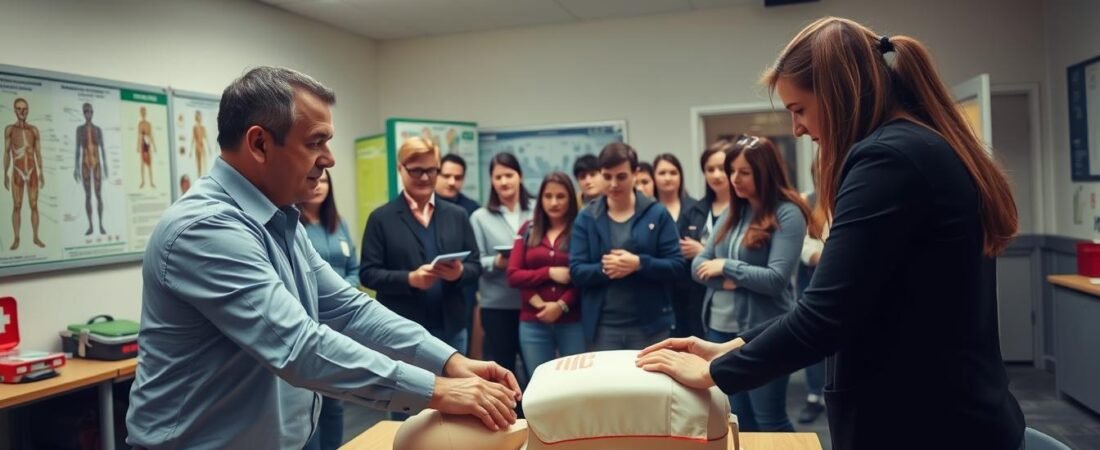
Becoming a CPR instructor is rewarding in many ways. You teach lifesaving skills and help keep communities safe. With more places needing CPR training, there’s a big demand for instructors.
This demand means great CPR instructor opportunities for those who want to make a difference.
This job is more than just teaching. It’s about saving lives and being a key part of community health. If you’re looking to earn more or start a new career, CPR instructor jobs offer a great chance for growth.
Key Takeaways
- Combining personal fulfillment and financial opportunity.
- Empowering individuals with lifesaving skills training.
- High demand across various settings like schools and community centers.
- Significantly contributing to community safety.
- Potential to supplement income or explore new career paths.
Why Become a CPR Instructor?
Becoming a CPR instructor is rewarding in many ways. It’s good for your career and makes you feel good about helping others. With more people needing CPR training, there’s a big need for skilled teachers. Start a journey that makes your life richer and teaches others how to save lives.
Demand and Need
The CPR training demand is growing fast in places like hospitals, schools, and community groups. This skill is key for being ready in emergencies and following safety rules. As an instructor, you help keep people safe and prepared.
The Personal Fulfillment
Being a CPR instructor also brings personal joy. Teaching others how to save lives gives you a sense of purpose. It’s rewarding to know you’re helping people learn skills that could save lives.
Basic Requirements for Becoming a CPR Instructor
Becoming a CPR instructor is rewarding. It lets you save lives and earn money. But, you must meet some basic requirements first. You need the right certification and to know the legal requirements for CPR training.
Certification and Expertise
Getting certified is a crucial step. The American Red Cross or the American Heart Association offer great programs. These programs teach you the latest CPR methods and rules.
- Enroll in an accredited CPR instructor certification course.
- Complete requisite training, combining theoretical knowledge with practical skills.
- Pass the certification exam to validate your expertise.
Legal and Licensing Prerequisites
You also need to follow legal requirements for CPR training. This includes knowing state and local laws. These laws tell you how to legally teach CPR and run your business.
- Research state and local licensing prerequisites for CPR instructors.
- Choose a suitable business structure (e.g., sole proprietorship, LLC) based on legal implications.
- Ensure compliance with health and safety standards relevant to CPR training.
Here’s a quick summary of what you need to become a CPR instructor:
| Certification and Expertise | Legal and Licensing Prerequisites |
|---|---|
| Acquire certification from recognized bodies | Understand local legal requirements |
| Pass necessary examinations | Choose appropriate business structure |
| Stay updated with current CPR guidelines | Adhere to health and safety standards |
Steps to Start Your CPR Instructor Side Hustle
Starting a CPR instructor side hustle is a great way to make money and help others. Here’s a detailed guide to help you start this rewarding journey.
Getting Certified
To start a CPR training business, you first need to get certified. The American Red Cross offers programs for adult and pediatric CPR, AED use, and basic first aid. You must be at least 16 to apply, and costs are listed on their website.
Obtaining the Necessary Equipment
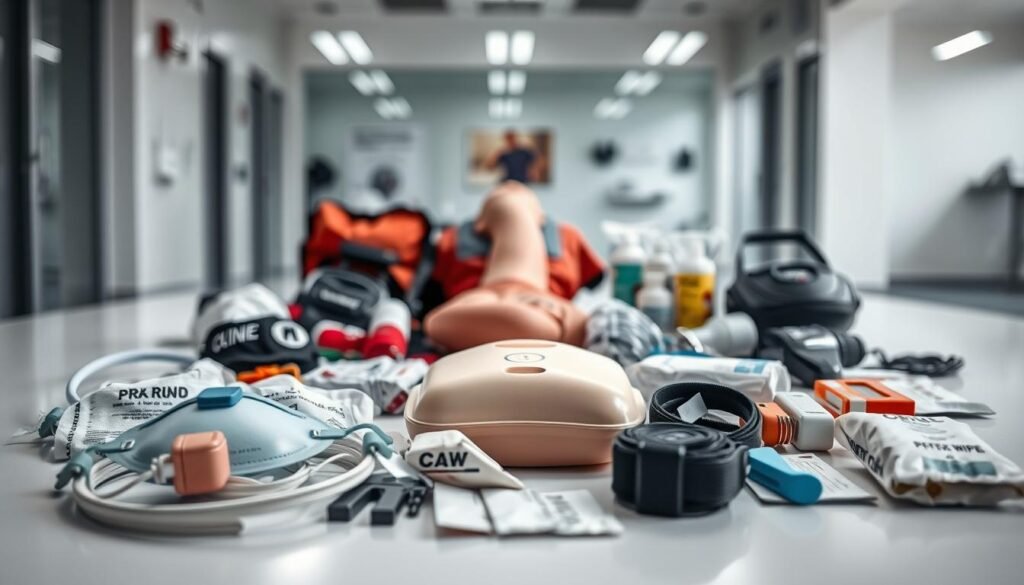
After getting certified, you’ll need to buy CPR equipment. This includes mannequins, AED trainers, and first aid kits. To save money, look for used equipment or discounts from suppliers. Good equipment makes your classes effective and professional.
Finding a Venue for Classes
Finding a good place for classes is key. Look for spots that are easy to get to and can fit your class size. Community centers, schools, or local gyms are good options. Make sure the rental price fits your budget and offers a good learning space.
Earning Potential and Flexibility
Being a CPR instructor is a great job because it pays well and is very flexible. How much you earn depends on where you are, the classes you teach, and how many students you have. Cities usually pay more because there’s a bigger demand for these skills.
Also, what classes you teach affects your pay. For example, teaching Pediatric CPR can earn you more. And, teaching more students means you can make more money, up to $50 to $80 per student.
This job is also great because it’s very flexible. You can teach classes when it fits your schedule. This means you can have a good work-life balance and earn as much as you want. You can choose when to work and how much to earn, making it a fulfilling side job.
| Factor | Impact on Earnings |
|---|---|
| Location | Urban areas typically offer higher rates. |
| Class Types | Specialized classes can command higher fees. |
| Class Size | Larger classes lead to increased revenues. |
Marketing Your CPR Business
Creating a successful CPR business needs smart marketing. Using digital tools and community events helps grow your client base. This approach leads to long-term success.
Digital Marketing Strategies
Digital marketing is key to reaching more people. Start with social media on Facebook, Instagram, and Twitter. Share why CPR training is vital and how your classes can save lives.
Google Ads are also effective. Use keywords like marketing CPR classes and CPR business promotion to attract those searching for CPR training.
Email marketing is another strong tool. Build a list to send out newsletters, class schedules, and special offers. Update your website with CPR tips and success stories to draw more visitors and improve your SEO.
Community Outreach
Connecting with your local community is vital for a good reputation. Host free workshops, partner with schools, and join local health fairs. These efforts boost your visibility and show your dedication to safety and well-being.
| Community Outreach Activity | Benefits |
|---|---|
| Free Workshops | Attracts new clients and raises awareness |
| School Partnerships | Ingrains CPR knowledge in youth and builds long-term relationships |
| Health Fairs | Enhances brand visibility and trust |
By mixing digital marketing with community outreach, you get a strong promotional mix. This way, your CPR classes can reach a wide and varied audience.
Licensing and Partnering with the American Red Cross
Becoming a Licensed Training Provider (LTP) with the American Red Cross has many benefits. It boosts your credibility and gives you more options for CPR training. By teaming up with this well-known organization, you can use their resources and brand to draw in more students.
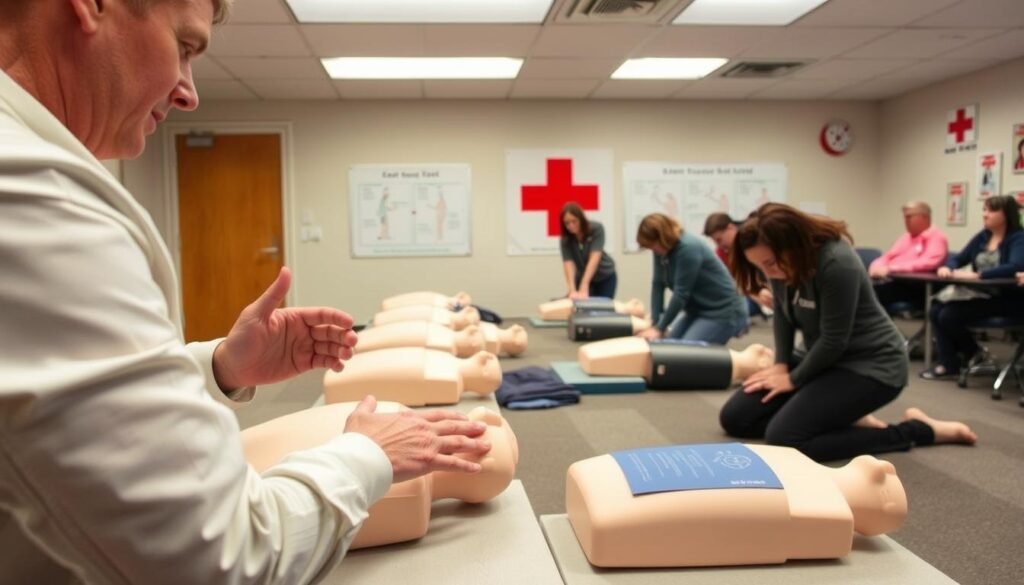
To join the American Red Cross CPR training network, you must follow some steps. First, you need to apply and pass a background check. You also have to show proof of your instructor certification.
After getting approved, you’ll get lots of teaching materials and support from the American Red Cross. You’ll have access to the latest curriculum, marketing help, and chances to keep learning. These resources make sure your training meets national standards, ensuring top-notch education for your students.
| Benefits | Description |
|---|---|
| Brand Credibility | Affiliation with a trusted organization known for its emergency response expertise. |
| Resource Access | Availability of updated training materials, manuals, and professional support. |
| Expanded Curriculum | Capability to offer a wide range of courses beyond basic CPR. |
| Marketing Support | Utilization of American Red Cross branding for promotional efforts. |
To stay an LTP, you must keep up with CPR licensing needs and follow certain rules. You need to update your instructor certification regularly. You also have to follow the latest teaching guidelines from the Red Cross and take part in recertification programs.
Additional Courses You Can Offer as a CPR Instructor
By offering more courses, you can grow your skills and meet more community needs. Here are some advanced courses to add to your lineup.
Infant & Child CPR
Infant & Child CPR is key for parents, caregivers, and teachers. It teaches special techniques for emergencies with young patients. This course helps parents and caregivers feel ready to handle emergencies.
Advanced CPR training prepares you to teach these important skills well.
Automated External Defibrillation (AED)
Adding an AED course is a smart move. It teaches how to use Automated External Defibrillators, making CPR more effective. With AEDs in public places, this skill is very useful.
Learning both CPR and AED can greatly improve survival chances in heart emergencies.
Basic Life Support (BLS)
Basic Life Support (BLS) is for healthcare workers and first responders. It covers more than basic CPR, like airway management and ventilation. Offering BLS can draw in medical professionals wanting to improve their skills.
Advanced CPR training is key to mastering these advanced techniques.
Real-life Stories from CPR Instructors
CPR instructors have many life-saving stories and moments that inspire. They share their first training and how it has changed lives. One instructor said, “Teaching CPR has given me the chance to empower many, teaching them to save lives.”
A CPR instructor told of a time when their class saved a choking victim at a restaurant. This story shows how CPR training can change lives. Many instructors talk about the joy and fulfillment they get from their work. They say it has changed their view of life and their role in the community.
CPR instructors often talk about overcoming challenges. One instructor shared how they overcame early hurdles to become skilled. They see their work as more than a job, but as a crucial service to the public.
Conclusion
Starting a CPR instructor business is a journey filled with challenges and rewards. It requires understanding the basics and using smart marketing. Each step is key to success. This role is not just about making money; it’s about feeling fulfilled and saving lives.
By offering courses in Infant & Child CPR, AED, and Basic Life Support, you grow your skills. You also make a bigger impact in your community.
Becoming a certified CPR instructor opens many doors. Working with organizations like the American Red Cross makes your teaching credible. This job is flexible and can be very profitable, making it a great side hustle or full-time career.
With the right marketing and equipment, you’re set for success. This journey is more than starting a business; it’s about changing lives. The skills you teach could save lives, making your work incredibly valuable.
So, take the leap with confidence. Your hard work will not only improve your life but also make a real difference in the world.
FAQ
What is the demand for CPR instructors?
CPR is key in healthcare, education, and community groups. There’s a big need for CPR instructors to ensure safety and emergency readiness.
What kind of personal fulfillment can I expect from teaching CPR?
Teaching CPR is very rewarding. You teach others how to save lives. Many find it gives them a deep sense of purpose.
What certification do I need to become a CPR instructor?
You need CPR instructor certification from groups like the American Red Cross. Knowing the latest CPR methods is crucial.
Are there any legal and licensing prerequisites for becoming a CPR instructor?
Yes, you must follow state and local laws. Knowing about business structures and their legal sides is important.
What are the steps to get certified as a CPR instructor?
First, meet the eligibility criteria. Then, complete training from trusted sources like the American Red Cross. Costs and steps differ by organization.
What equipment do I need to start teaching CPR classes?
You’ll need mannequins and AED trainers. Look for deals on suppliers or second-hand equipment in good shape.
How can I find a suitable venue for my CPR classes?
Look at community centers, schools, and other groups. Consider space, cost, and ease of access when picking a venue.
What factors influence the earning potential of a CPR instructor?
Your earnings depend on location, class size, and the types of classes. Flexibility in scheduling and workload also affects your income.
What digital marketing strategies can I use to promote my CPR business?
Use social media, targeted ads, and email marketing. These can help you reach more people and build a loyal client base.
How important is community outreach for a CPR instructor?
It’s very important. Engage with the community through workshops, school partnerships, and local events. This builds your reputation and client base.
What are the benefits of becoming a Licensed Training Provider (LTP) with the American Red Cross?
Being an LTP gives you access to resources, credible branding, and a wider curriculum. It also keeps you in good standing and boosts your credibility.
Are there additional courses I can offer as a CPR instructor?
Yes, you can teach Infant & Child CPR, AED training, and Basic Life Support (BLS) for healthcare and first responders.